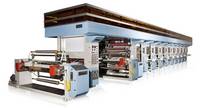
We are supplying offset printing machine with so competitive price.
However, as there are many kinds machine depending on price and made year etc.
When you bring us inquiry, please mention as follows;
1. How many Colar
2. Area to be printed
3. Your wishing price range.
As we are a member of printing industry association, we expect we can get your favorite machines with competitive price compared to the other places through our net work or our belonging warehouse.
Thank you
Printing machine operators prepare, operate, and maintain the printing presses in a pressroom. Duties of printing machine operators vary according to the type of press they operate�offset lithography, gravure, flexography, screen printing, or letterpress. Offset lithography, which transfers an inked impression from a rubber-covered cylinder to paper or other material, is the dominant printing process. With gravure, the recesses on an etched plate or cylinder are inked and pressed to paper. Flexography is a form of rotary printing in which ink is applied to the surface by a flexible rubber printing plate with a raised image area. Gravure and flexography should increase in use, but letterpress, in which an inked, raised surface is pressed against paper, will be phased out. In addition to the major printing processes, plateless or nonimpact processes are coming into general use. Plateless processes�including electronic, electrostatic, and ink-jet printing�are used for copying, duplicating, and document and specialty printing, usually by quick and in-house printing shops.
To prepare presses for printing, machine operators install and adjust the printing plate, adjust pressure, ink the presses, load paper, and adjust the press to the paper size. Press operators ensure that paper and ink meet specifications, and adjust margins and the flow of ink to the inking rollers accordingly. They then feed paper through the press cylinders and adjust feed and tension controls.
While printing presses are running, press operators monitor their operation and keep the paper feeders well stocked. They make adjustments to correct uneven ink distribution, speed, and temperatures in the drying chamber, if the press has one. If paper jams or tears and the press stops, which can happen with some offset presses, operators quickly correct the problem to minimize downtime. Similarly, operators working with other high-speed presses constantly look for problems, making quick corrections to avoid expensive losses of paper and ink. Throughout the run, operators occasionally pull sheets to check for any printing imperfections.
In most shops, press operators also perform preventive maintenance. They oil and clean the presses and make minor repairs.
Machine operators' jobs differ from one shop to another because of differences in the kinds and sizes of presses. Small commercial shops are operated by one person and tend to have relatively small presses, which print only one or two colors at a time. Operators who work with large presses have assistants and helpers. Large newspaper, magazine, and book printers use giant "in-line web" presses that require a crew of several press operators and press assistants. These presses are fed paper in big rolls, called "webs," up to 50 inches or more in width. Presses print the paper on both sides; trim, assemble, score, and fold the pages; and count the finished sections as they come off the press.
Most plants have or will soon have installed printing presses with computers and sophisticated instruments to control press operations, making it possible to set up for jobs in less time. Computers allow press operators to perform many of their tasks electronically. With this equipment, press operators monitor the printing process on a control panel or computer monitor, which allows them to adjust the press electronically.






)